
EU Forum of Experts
Twelve experts from seven countries. One brief: write the guidelines Europe's milk banks had been missing.
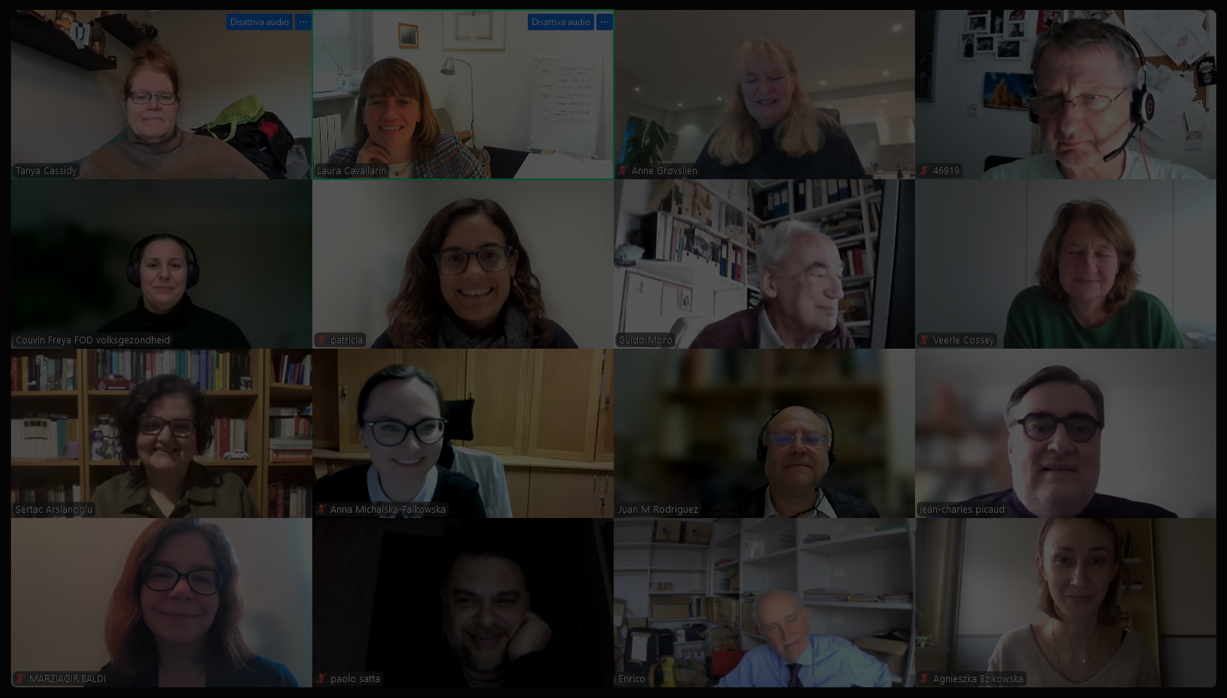
The EU Forum of Experts was the body that wrote the IMAGINE-HMB guidelines. Constituted through an open, EU-wide call and appointed on published criteria, it brought together clinicians, scientists, milk bank professionals and regulatory specialists to do work no single country could do alone: agree what good practice in human milk banking looks like across Europe, and set it down in a form national authorities and milk banks can use.
The Forum's mandate
The consortium gave the Forum four objectives, each with a defined output:
Evaluate the consolidated comparison of existing national and international guidelines on human milk banking prepared by the IMAGINE-HMB partners, and agree which recommendations were already settled enough to carry into the EU guidelines without further review.
Determine where the evidence was thin — reaching consensus on which topics, agreed or contested across existing guidelines, warranted a fresh literature search.
Evaluate and grade the evidence retrieved for each selected topic, and agree recommendations on that basis.
Draft consensus-based guidelines in collaboration with the consortium, covering technical, safety and quality standards for human milk banking and processing, and the oversight requirements that sit alongside them.
That work was framed by a regulatory deadline. Under the EU Regulation on standards of quality and safety for substances of human origin (SoHO), human milk banks must be registered as SoHO entities or establishments by August 2027, and be fully compliant by August 2028.
How the Forum was formed
Expertise defined before individuals
The IMAGINE-HMB Steering Committee began by setting out the expertise the Forum would need, rather than the people it wanted. That list covered human milk banking professionals — managers, doctors, nurses and dieticians — alongside neonatologists and specialists in lactation science, human milk biochemistry, microbiology, food technology, blood and tissue banking, and quality and safety management.
Including people who run milk banks day to day was deliberate. It kept operational and clinical reality in the room during drafting, and guarded against guidelines written in language only guideline developers can read.
An open, EU-wide call
The call for experts opened on 10 November 2024 and closed on 30 November, published on the project website and circulated through EMBA's social channels and direct outreach to professional networks. Applicants submitted a CV and a declaration of conflicts of interest, and were required to comply with the WHO Code.
Fifty-one applications arrived, from fifteen countries. The largest groups came from Poland (10), Belgium (8), Italy (7) and Spain (6), with applications also received from the United Kingdom, France, Norway, Germany, Greece, Austria, Croatia, Czechia, Ireland, the Netherlands and Serbia.
Conflicts of interest assessed first
Applications were screened for conflicts of interest before any academic assessment took place. Eight were excluded at that stage, on conflict-of-interest grounds or because the submission was incomplete. Candidates with major conflicts, financial or non-financial, could not be appointed; minor conflicts were managed at individual level, for example by restricting participation in particular parts of a meeting. Any later change in a member's declared interests had to be reported to the Steering Committee.
A published scoring system
Remaining candidates were ranked on a 100-point scale applied consistently to every application:
Publications and research impact — total and field-specific peer-reviewed output, h-index and citation counts drawn from Scopus, and authorship of guidelines or recommendations (up to 50 points)
Participation in research projects — role, scale, and the collaborative or interdisciplinary nature of the work (up to 10 points)
Invited talks — keynote and invited presentations, weighted by the standing of the conference (up to 20 points)
Engagement in scientific and regulatory committees — active memberships, roles held, and duration of involvement (up to 20 points)
The Steering Committee then reviewed the highest-scoring candidates as a group, confirming that the appointed Forum covered every required area of expertise rather than simply taking the twelve highest totals. Members were appointed for a term of twelve months and signed an agreement accepting the Forum's statute, its activities, and its deliverable timeframes.
Strong applicants who were not appointed were invited onto the IMAGINE-HMB Advisory Board, which broadened the project's national coverage well beyond the countries represented in the Forum itself.
The members
Prof. Enrico Bertino, MD — Italy
Agnieszka Bzikowska-Jura, PhD — Poland
Veerle Cossey, MD, PhD — Belgium
Freya Couvin, MSc — Belgium
Prof. Christoph Fusch, MD — Germany
Marzia Giribaldi, PhD — Italy
Anne Grovslien, LC — Norway
Anna Michalska-Falkowska, PhD, MSc — Poland
Prof. Guido E. Moro, MD — Italy
Prof. Jean-Charles Picaud, MD — France
Prof. Juan Rodriguez, VMD, PhD — Spain
Patricia Sagre, MSc — Spain
Seven countries were represented: Italy (3 members), Belgium, Poland and Spain (2 each), and France, Germany and Norway (1 each).
How the Forum worked
The Forum met online for the first time on 24 February 2025. The coordinator set out the project's goals and the Forum's workplan; each member introduced themselves; and Laura Cavallarin presented the scientific literature analysis conducted to that point, the comparison of existing guidelines, and the methodology proposed for further research. The Forum reconvened the following week to appoint a lead responsible for running its meetings and to divide into smaller groups organised by area of expertise.
Consensus was built through the Delphi methodology — structured, iterative rounds in which positions are put, responses gathered, and the question re-put until agreement is reached or the disagreement is clearly mapped. Online working sessions ran roughly monthly, each supported by documents circulated in advance.
The Forum convened in person twice:
Ireland, May 2025 — the first face-to-face meeting, hosted by the Irish Neonatal Health Alliance, bringing together Forum members, the Steering Committee and all five consortium partners. The meeting settled the Forum's working method and mapped the structure of the guidelines. Hosting in Ireland placed parents and families, and the question of trust, alongside the technical work.
Venice, October 2025 — a public session held alongside the EMBA congress opened the project to the wider milk banking and neonatology community, followed by closed working sessions in which thematic groups reported to plenary on points of consensus and points still requiring evidence, and produced the first consolidated drafts of the guideline text.
What the Forum produced
The Forum's central outputs were two complementary sets of draft EU guidelines: technical standards for the safety and quality of donor human milk handling, processing and use; and oversight requirements for the authorities responsible for authorising and supervising human milk banking establishments.
Its work also fed the project's wider outputs — the implementation plan that helps milk banks move towards SoHO compliance, and the training programme and digital tools developed for milk bank professionals.
The wider consultation
The Forum did not work in isolation. IMAGINE-HMB mapped the human milk banking ecosystem into nine stakeholder categories — milk bank operators; donors and donor associations; associations; healthcare professionals; public health and regulatory authorities; oversight authorities; organisations specialised in tissues, blood, cells and organs; scientists and researchers; and industrial groups — and engaged all of them except industrial groups, which were excluded from the guideline process on conflict-of-interest grounds.
The project's European network reached 301 human milk banks. Alongside them, the Advisory Board provided national-level expertise from across the EU, and competent authorities were engaged directly on how oversight of milk banks is being organised in each country under the SoHO Regulation.
Beyond the project
Guidelines date. Evidence moves, national oversight arrangements change, and the SoHO framework will bed in over years rather than months. IMAGINE-HMB put in place a post-project strategy for keeping the EU Forum of Experts operating beyond the project's close in August 2026, so that what the Forum produced can be maintained rather than left to age.