
IMPLEMENT SoHO Launch
The European Milk Bank Association recently hosted "The Gift of Donor Human Milk," bringing together neonatologist Prof. Daniel Klotz and anthropologist Prof. Tanya Cassidy to explore how clinical excellence and human experience shape neonatal care through donor milk.
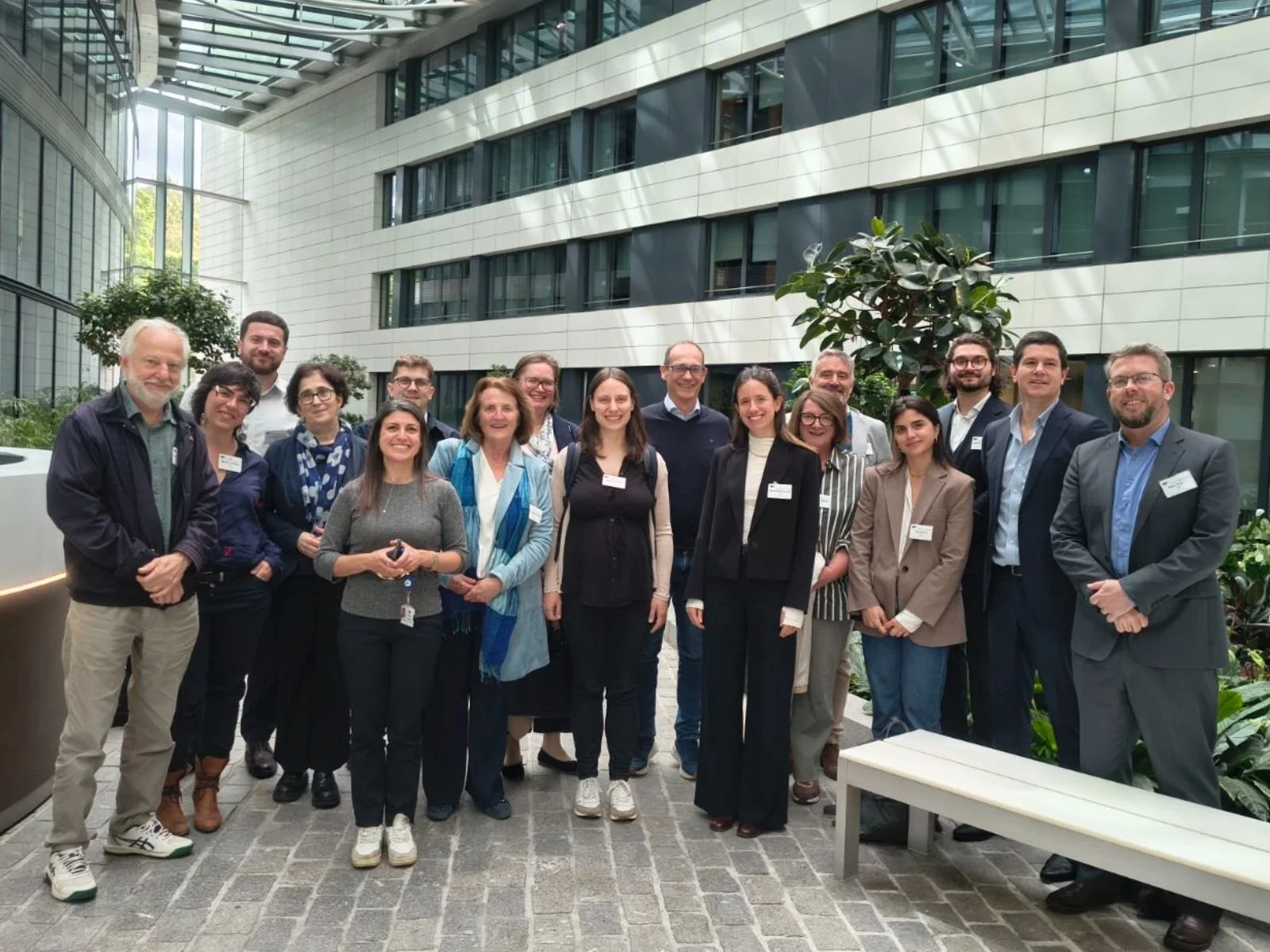
We are pleased to announce the launch of IMPLEMENT-SoHO, a service contract implemented by the European Health and Digital Executive Agency (HaDEA) on behalf of DG SANTE under the #EU4Health Programme, supporting the implementation of the new EU Regulation on Substances of Human Origin (#SoHO).
Today’s kick-off meeting brought together partners from across Europe, united by a shared commitment to advancing safe, ethical and high-quality SoHO practices.
Over the coming months and years, IMPLEMENT-SoHO will focus on training, knowledge sharing and supporting professionals in adapting to the new regulatory framework.
We look forward to collaborating with the SoHO community to turn regulation into practice.
IMAGINE-HMB Project Meeting in Venice 🇪🇺
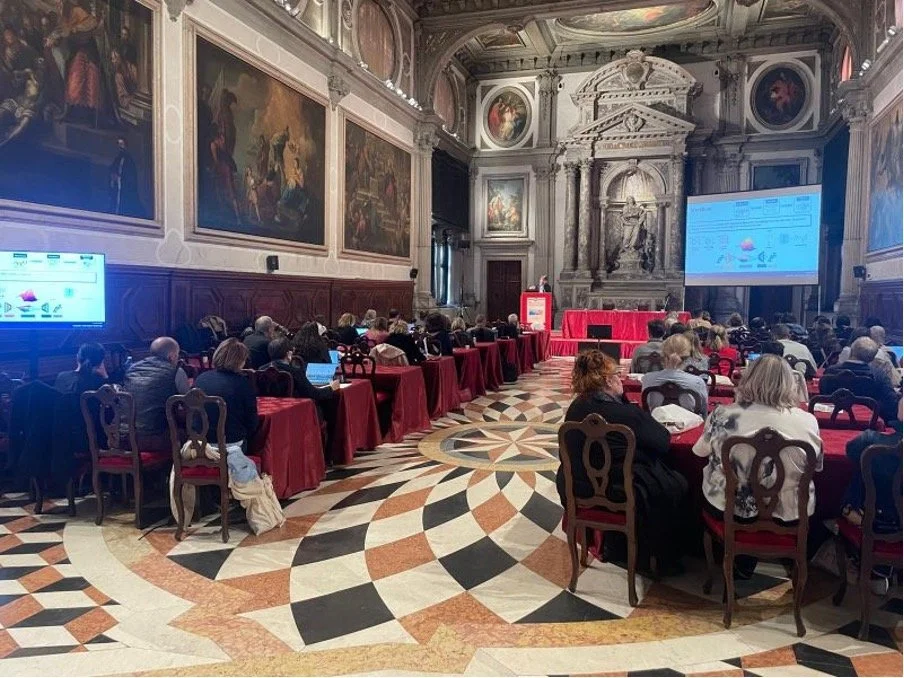
On October 17–18, 2025, the IMAGINE-HMB Project held its latest meeting in Venice, alongside the 8th EMBA Congress.
🔹 Friday featured an overview of project activities and challenges presented by the Project Coordinator Sertac Arslanoglu, MD, followed by the AEBLH Coordinator NADIA RAQUEL GARCIA LARA outlining the methodological approach for guideline comparison and literature review. The day also included a Workshop on Oversight Requirements in Human Milk Banking and a presentation of the EU Marie Curie GALATEA Project – Modelling the Quality of Human Milk, by Marco Deriu.
🔹 Saturday brought together the Expert Forum for its second face-to-face meeting. The group engaged in constructive discussions, reached consensus on several open items, and reviewed progress on drafting the harmonized European Guidelines for Donor Human Milk.
A heartfelt thank you to all members of the Expert Forum — Anna Michalska-Falkowska, PhD, Patricia Sagré, Marzia Giribaldi, Christoph Fusch, Enrico Bertino, Guido Moro, Agnieszka Bzikowska-Jura, Juan Miguel Rodriguez, Freya Couvin, Veerle Cossey, Anne Grøvslien, and Jean-Charles PICAUD — for their dedication and expertise.
We also warmly thank the Consortium Partners and their leaders for their collaboration and commitment:
• European Milk Bank Association (EMBA) – Sertac Arslanoglu, MD
• Polish Human Milk Bank Foundation – Aleksandra Wesołowska
• German Human Milk Bank Initiative (FMBI) – Daniel M. M. Klotz Klotz
• Association of Human Milk Banks (AEBLH) – NADIA RAQUEL GARCIA LARA
• Irish Neonatal Health Alliance (INHA) – Tanya Cassidy
And a special thanks to the project managers Paolo Satta and Laura Cavallarin for their excellent coordination and support.
Together, we are working toward harmonized, evidence-based, and equitable donor human milk practices across Europe. 💙
Face to Face meeting of IMAGINE HMB in Ireland
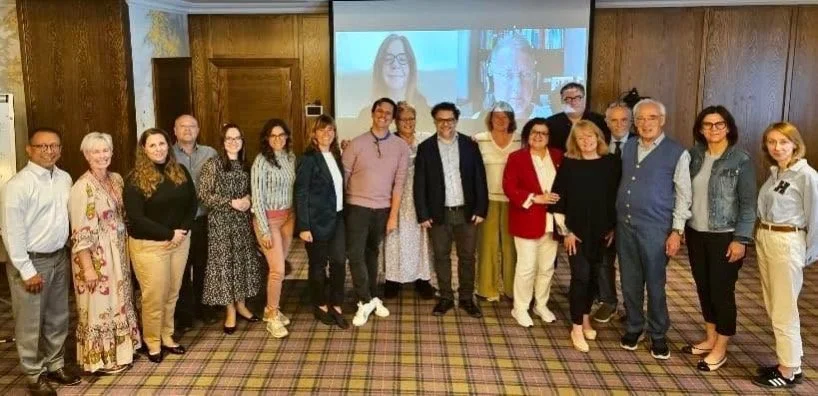
Our EU-Funded İMAGİNE-HMB Project had its second face-to-face meeting in Ireland, Dublin, Maynooth in the beginning of this week.
This time we have become even a bigger family with the partecipation of all Consortium Partners: EMBA (the Project Coordinator), INHA (Irish Neonatal Health Alliance, the local organizer), AEBLH (the Spanish Association of Human Milk Banks), FMBI (the German Human Milk Bank Initiative) & HMBF (the Polish Human Milk Bank Foundation); our Expert Forum members; and the Irish guests.
It has been 2 fruitful days of intense collaborative work. The first day was intentionally planned to coincide with the Human Milk Donation Day.
As the local organizer and the Coordinator of the INHA team Assoc. Prof Tanya Cassidy opened the meeting with a nice introduction. Then Prof. Sertac Arslanoglu, the Coordinator of the IMAGINE-HMB Project and President of EMBA, gave a great 45-min presentation on the story of EU SoHO regulation, the involvement of donor human milk, and the progress of the Project.
After the Coffee-Break we had our Workshop. Paolo Satta and Laura Cavallarin from the Project Management Team conducted it successfully distributing to all of us a SWOT Analysis test to identify strengths, weaknesses, oppportunities, and threats of the regulation on milk banking. We had a lively discussion and had new insights.
In the afternoon and the second day Expert Forum worked on the comparison of the 14 Guidelines the Consortium handed over to them, and had consensus on which points to include in the guidelines and which points to be sent for Delphi Consensus.
The second day we had our Steering Committee Meeting as well discussing about reporting (presented by Paolo Satta) WP training (presented by Nadia Garcia) and a frame for Guideline drafting (presented by Daniel Klotz and German team).
It was a wonderful and great meeting inspiring us for new ideas and production.
Heartfelt thanks to the INHA team for the great hospitality and organization and to each one of our team members and our distinguished experts for the great work realized
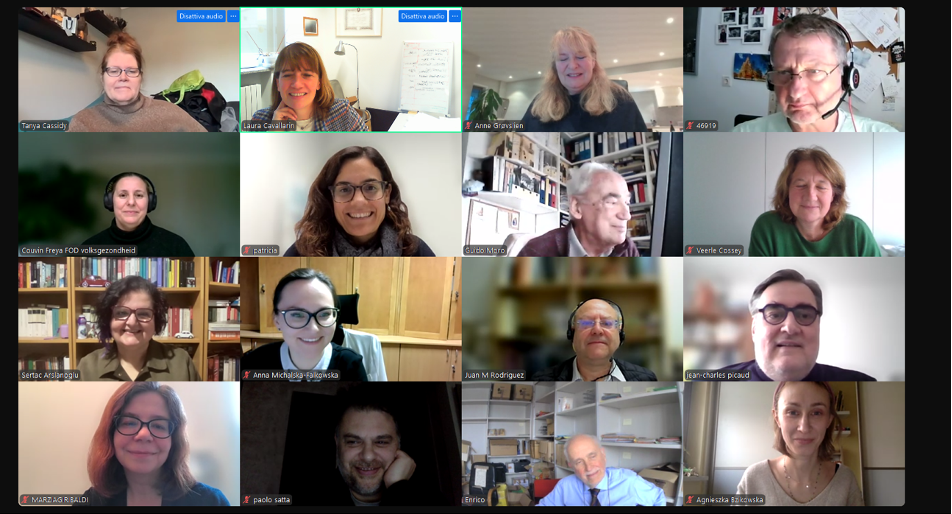
Twelve experts, seven countries: inside the IMAGINE-HMB EU Forum of Experts
Harmonised European guidelines for donor human milk only carry weight if the people who write them are the right people, chosen in a way anyone can inspect. That principle shaped the IMAGINE-HMB EU Forum of Experts from the outset.
The Forum was given a demanding brief: to evaluate the evidence base for human milk banking practice across Europe, and to draft two complementary sets of guidelines — technical standards for the handling, processing and use of donor human milk, and oversight requirements for the authorities that authorise and supervise human milk banking establishments. Both sit against a hard deadline. Under the EU Regulation on standards of quality and safety for substances of human origin (SoHO), human milk banks must be registered as SoHO entities or establishments by August 2027, and be fully compliant by August 2028.
An open call, openly judged
The Steering Committee began by defining the expertise the Forum would need, rather than the individuals it wanted. That list spanned human milk banking professionals — managers, doctors, nurses and dieticians — alongside neonatologists and specialists in lactation science, human milk biochemistry, microbiology, food technology, blood and tissue banking, and quality and safety management.
Including people who run human milk banks day to day was a deliberate choice. It kept the operational and clinical realities in the room during drafting, and it guarded against guidelines written in language only guideline developers can read.
The call for experts opened on 10 November 2024 and closed on 30 November, published on the project website and circulated through EMBA’s social channels and direct outreach to professional networks. Applicants submitted a CV and a declaration of conflicts of interest, and were required to comply with the WHO Code.
Fifty-one applications arrived, from fifteen countries. The largest groups came from Poland (10), Belgium (8), Italy (7) and Spain (6), with applications also received from the United Kingdom, France, Norway, Germany, Greece, Austria, Croatia, Czechia, Ireland, the Netherlands and Serbia.
Conflicts of interest, assessed first
Before any academic assessment took place, applications were screened for conflicts of interest. Eight were excluded at this stage, on conflict-of-interest grounds or because the submission was incomplete. Candidates with major conflicts, financial or non-financial, could not be appointed at all; minor conflicts were managed at individual level, for example by restricting participation in particular parts of a Forum meeting. Any subsequent change in a member’s declared interests must be reported to the Steering Committee.
A scoring system published in advance
The remaining candidates were ranked on a 100-point scale, applied consistently across every application:
• Publications and research impact — total and field-specific peer-reviewed output, h-index and citation counts drawn from Scopus, and authorship of guidelines or recommendations (up to 50 points)
• Participation in research projects — role, scale and the collaborative or interdisciplinary nature of the work (up to 10 points)
• Invited talks — keynote and invited presentations, weighted by the standing of the conference (up to 20 points)
• Engagement in scientific and regulatory committees — active memberships, roles held and duration of involvement (up to 20 points)
The Steering Committee then reviewed the highest-scoring candidates as a group, checking that the appointed Forum covered every required area of expertise rather than simply taking the twelve highest totals. Members were appointed for a term of twelve months and signed an agreement accepting the Forum’s statute, its activities and its deliverable timeframes.
Strong applicants who were not appointed were not lost to the project. Many were invited onto the IMAGINE-HMB Advisory Board, which broadened the project’s national coverage well beyond the countries represented in the Forum itself.
Meet the EU Forum of Experts
The twelve appointed members, listed alphabetically:
• Prof. Enrico Bertino, MD — Italy
• Agnieszka Bzikowska-Jura, PhD — Poland
• Veerle Cossey, MD, PhD — Belgium
• Freya Couvin, MSc — Belgium
• Prof. Christoph Fusch, MD — Germany
• Marzia Giribaldi, PhD — Italy
• Anne Grovslien, LC — Norway
• Anna Michalska-Falkowska, PhD, MSc — Poland
• Prof. Guido E. Moro, MD — Italy
• Prof. Jean-Charles Picaud, MD — France
• Prof. Juan Rodriguez, VMD, PhD — Spain
• Patricia Sagre, MSc — Spain
Seven countries are represented: Italy (3 members), Belgium, Poland and Spain (2 each), and France, Germany and Norway (1 each).

Discover other related EU-funded projects!

GAPP (facilitatinG the Authorisation of Preparation Process for blood, tissues and cells) is a Joint Action aimed at facilitating the development of a common and optimal approach to assess and authorize preparation processes in blood and tissues establishments

GAPP-PRO Joint Action builds on the GAPP initiative by piloting risk assessment and authorization methods across EU member states. Key objectives include refining guidelines, enabling joint assessments, and expanding the EuroGTP II tool for new SoHO applications, ensuring safety and accessibility.

EGALITE (European Group for Accreditation and Liaison of Blood-Tissues and Cells Establishments) aims to promote the harmonization of practices among Donation Centres and Blood and Tissue Establishments, encourage the collaboration among stakeholders and the implementation of strategies required to improve accessibility and sufficiency of SoHO at European level.

IMAGINE-HMB Project Kick-off Meeting
We are excited to announce the successful launch of the IMAGINE-HMB Project during our Kick-Off Meeting held in Milan. This two-day event brought together leading experts, partners, and stakeholders to outline our ambitious objectives and set the foundation for a collaborative jo
Date: September 10–11, 2024 | Location: Biomedia, Via Temolo 4, Milan
We are excited to announce the successful launch of the IMAGINE-HMB Project during our Kick-Off Meeting held in Milan. This two-day event brought together leading experts, partners, and stakeholders to outline our ambitious objectives and set the foundation for a collaborative journey.
Day 1 Highlights
The first day focused on the project overview, objectives, and work plan, with sessions dedicated to establishing the Expert Forum, drafting guidelines, planning implementation, designing a training programme, and outlining dissemination and communication strategies.
Day 2 Highlights
The second day addressed administrative and financial management, provided insights from project officers, and facilitated discussions on the Consortium Agreement and open points.
Looking Ahead
This meeting laid the groundwork for collaboration and progress. We are excited to begin implementing the project’s vision and look forward to achieving impactful results.
Stay connected for updates!